
By David Brzostowicki
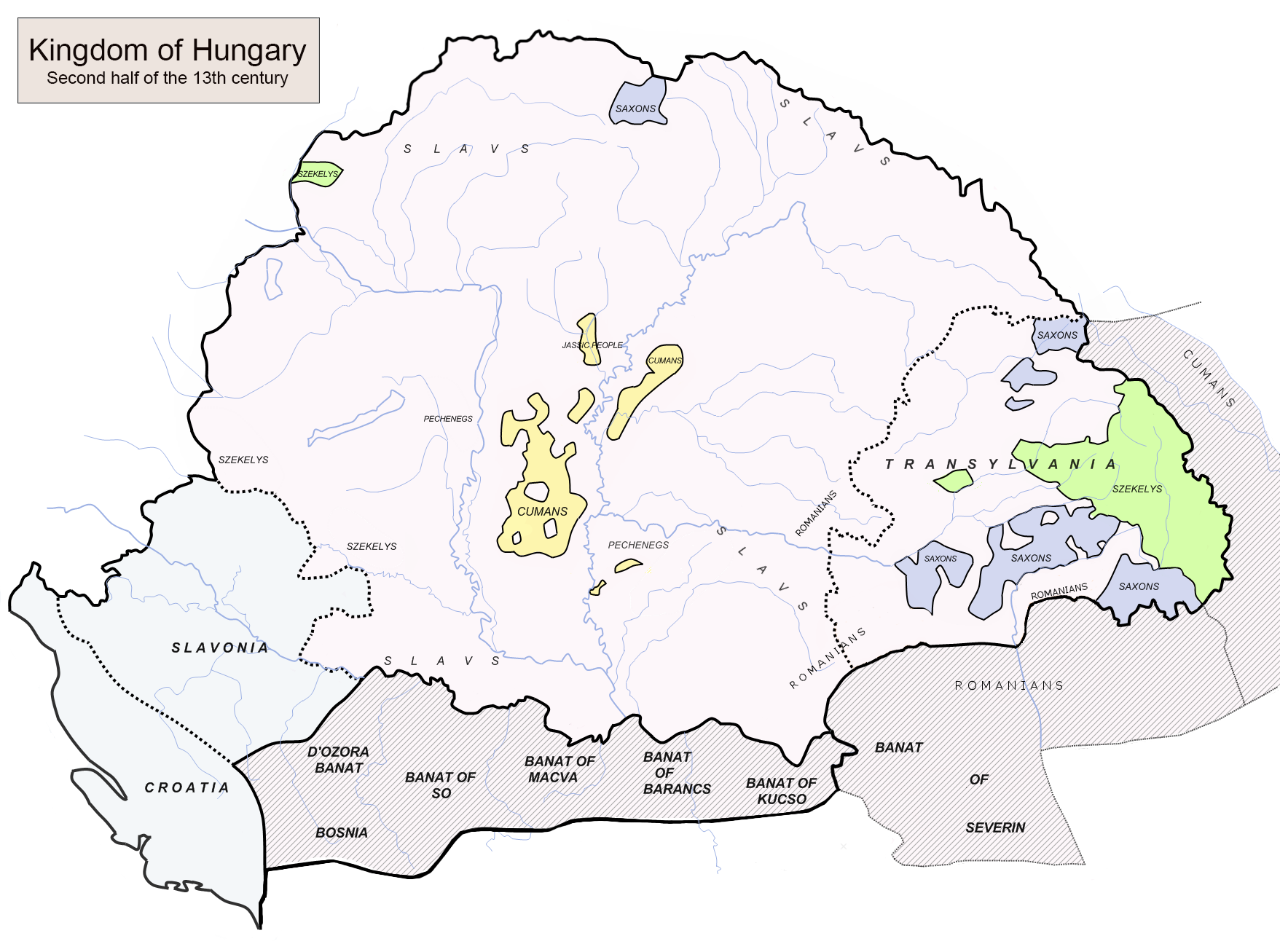
In November 1272, on the Island of Hares — home to both a nunnery and the Hungarian king's summer residence — a nobleman was lured to a purported council meeting, only to be murdered. His name was Béla, Duke of Macsó, a province nestled along the Danube in modern-day Serbia. He was in his early to mid-twenties, childless, and, depending on whom you asked, either a stabilizing force in a fractured kingdom or a dangerous threat.
Through his mother, Princess Anna of Hungary, Béla was reputed to be the grandson of King Béla IV and a member of the House of Árpád, the dynasty that had ruled Hungary for three centuries. Through his father, Rostislav, Prince of Halych, he claimed descent from the Rurikids, the royal house of Kievan Rus’, the predecessor to modern Russia. If true, he bridged two of medieval Europe’s most powerful dynasties.
For over a decade, King Béla IV and his heir Stephen V had fought for control of Hungary. After Stephen V won a decisive victory at the Battle of Isaszeg in 1265, forcing his father to cede the eastern half of the kingdom, Duke Béla found himself on the losing side of a civil war.
When King Stephen V died unexpectedly in 1272, his son, Ladislaus IV, was only ten years old. As the oldest male cousin of the child king, Béla stood next in line to the throne, eligible to serve as regent, or even king, if anything happened to Ladislaus IV. He controlled vast estates in southern Hungary and commanded loyalty from powerful allies. To some nobles, he represented order in a kingdom teetering on chaos. To others, including Ladislaus IV’s mother, he was a threat.
Henrik Kőszegi, head of the powerful House of Héder, also had a personal vendetta against Béla. Once Béla’s mentor, the two had fought side by side in Hungary’s civil wars. But at the Battle of Isaszeg, Béla fled the field while Kőszegi was captured. His subsequent years of imprisonment gave Kőszegi ample reason for resentment.
Various chronicles report that after being invited to the council meeting in the nunnery, Béla was ambushed and murdered. One account states that Kőszegi himself was present and accused Béla of treason before cutting him “to pieces” during the ensuing argument. Another states that it was Kőszegi’s mercenaries who “hacked [Béla] to pieces with swords and maces so that his skull split in two.”
Béla’s sisters, both nuns on the island (today known as Margaret Island), were rumored to have recovered and buried his mutilated corpse within the nunnery walls.
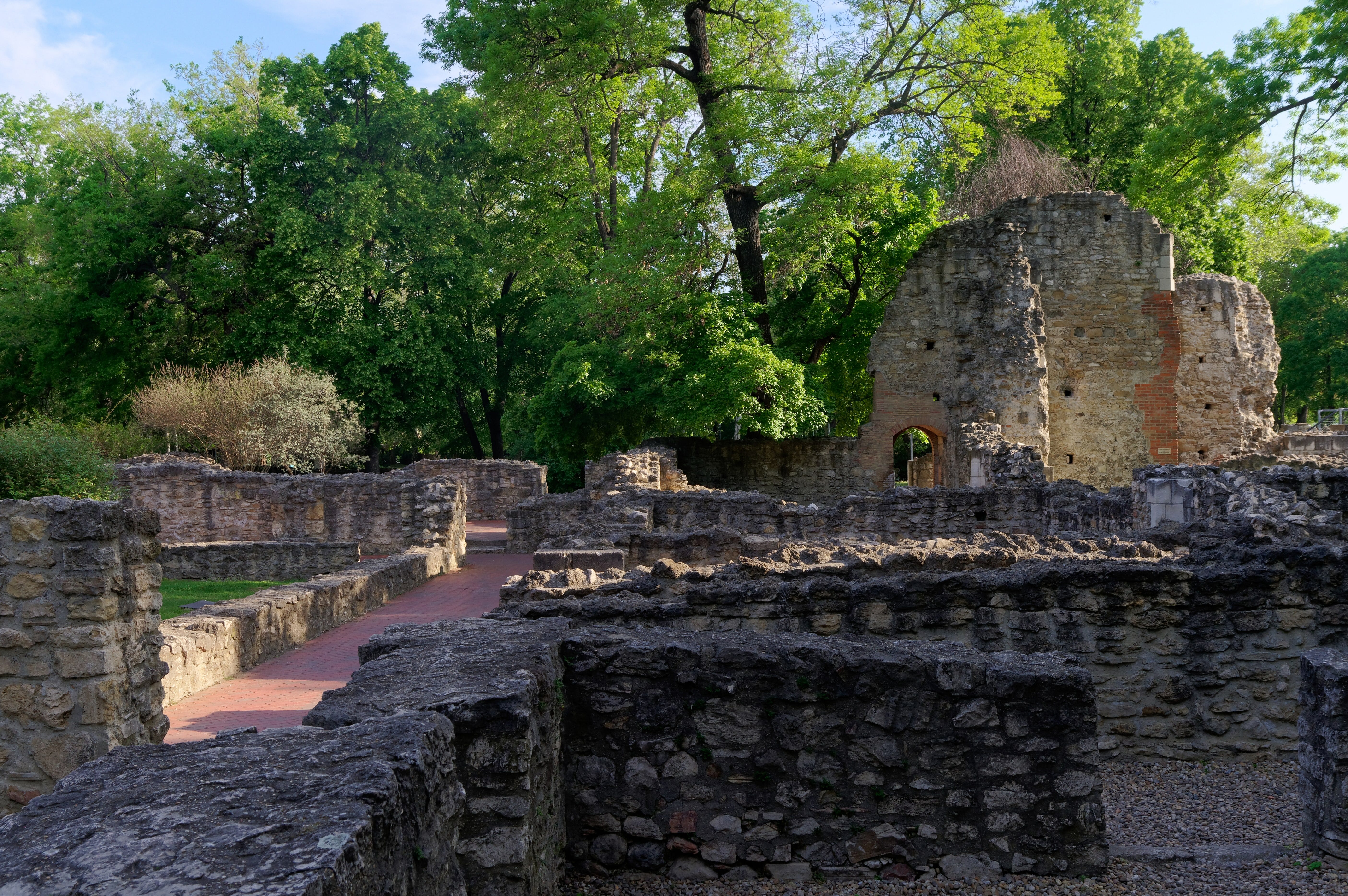

There, the body rested quietly until the spring of 1915. Then, during an excavation of the monastery’s sacristy, archaeologists discovered the skeleton of a young man, buried with his head toward the altar, which bore the marks of extraordinary violence. Anthropologist Lajos Bartucz asked to analyze the remains at the Institute of Anthropology at the University of Budapest.
Twenty-three cut marks scored the bones. Far too many for a duel, these were distributed across the skeleton in a pattern that suggested multiple attackers striking from different directions. The wounds indicated that the assault had continued even after the victim fell, with the body further mutilated while on the ground. Bartucz estimated the skeleton belonged to a male between 20 and 25 years old. Based on the body’s location, wounds, and age, he proposed them to be the remains of Duke Béla of Macsó.
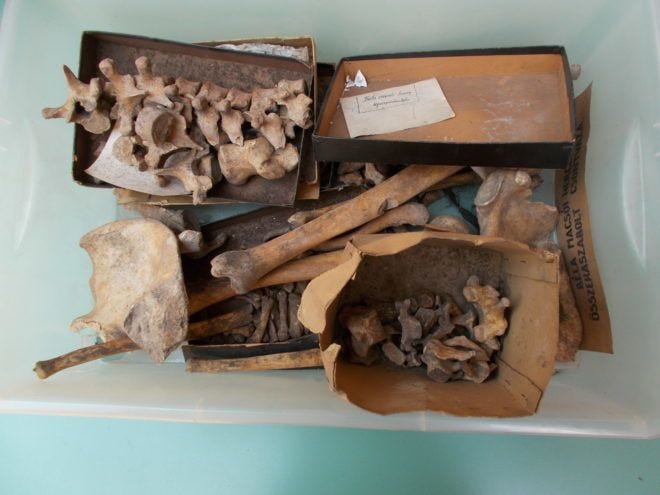
But Bartucz never formally published this analysis. Instead, the bones went into a wooden box with a slip of paper reading, “butchered skeleton of Béla,” and were shuffled (skull and long bones separately) between institutions for decades.
In 2018, interest resumed when researchers at the Hungarian Natural History Museum found postcranial bones that had been missing from the skeleton for eighty years, tucked away in the box with Bartucz’s handwritten note. Zsolt Bernert and Ágota Buzár published preliminary findings on the several long bones, fragments of the pelvis, and vertebrae scored with cut marks.
When biological anthropologist Tamás Hajdu saw their report, he realized exactly where the skeleton’s missing skull was: right near his office at the Department of Anthropology at Eötvös Loránd University in Budapest. It had been misidentified in the Aurél Török Collection, the department’s own repository of skeletal remains.1
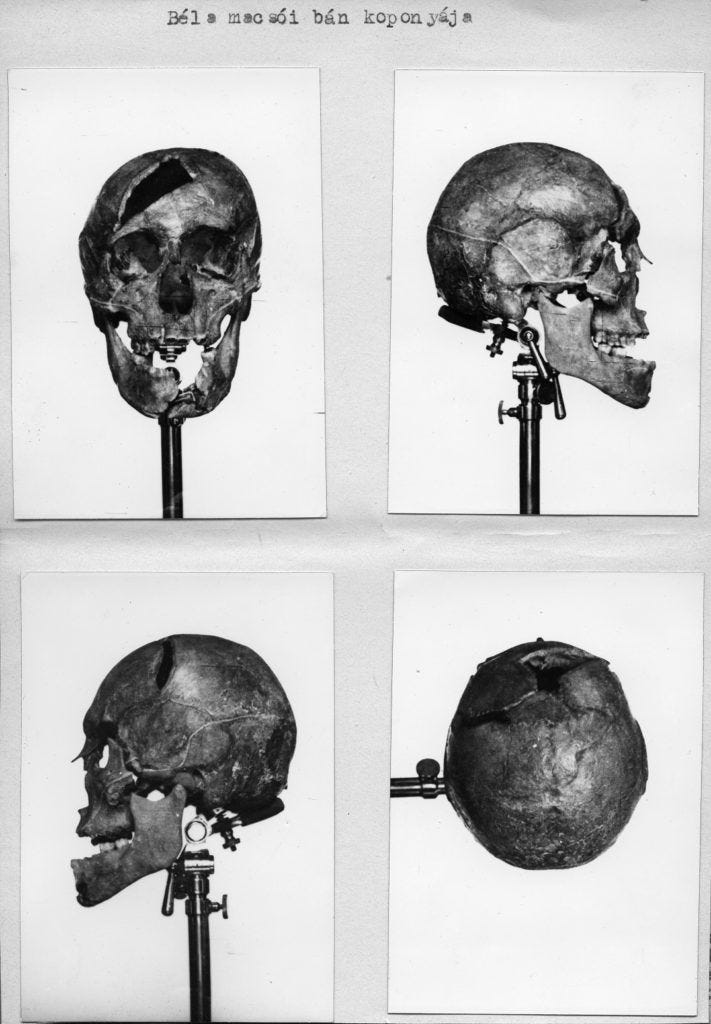
Hajdu and colleagues reunited the skull with the rest of the remains and launched a full investigation into the individual’s identity and the circumstances of his life and death.
Their conclusions were finally published in October 2025. They not only confirmed that the skeleton was Béla’s but also demonstrated his dual royal lineage and clarified the number of attackers and types of weapons used. Additionally, they suggested that the murder bore the hallmarks of personal grievance, not just political calculation.
Indeed, this study was the first ancient DNA-based identification of a medieval royal, resolving a century-old archaeological question through a convergence of the suite of scientific techniques known as “complex bioarchaeology.” Its toolkit includes skeletal morphology for biological profiles, stable isotope analysis to read the chemistry in bones and teeth revealing geographic origins and diet, radiocarbon dating for temporal placement, ancient DNA sequencing to identify individuals and establish family relationships, and forensic trauma analysis for reconstructing violence.
Taken together, “complex bioarchaeology” performs a kind of data resurrection, able to bring back individuals like Béla about whom records disagree, as well as those who didn’t merit sufficient attention by chroniclers or, more insidiously, whose recorded lives and deaths were intentionally altered.
The manipulation of historical records is, after all, as old as record keeping itself. Pharaoh Akhenaten’s name was so thoroughly erased after his death that he does not appear in the Abydos King List of Seti I, composed less than a century later. His existence was only rediscovered in the 19th century when archaeologists excavated his abandoned capital at Amarna.
Emperors were likewise erased in ancient Rome. In 211 CE, Caracalla had his co-ruling brother Geta murdered by Praetorian Guards. After executing 20,000 of Geta’s supporters, Caracalla ordered his brother’s name and image excised from every inscription and monument across the empire. Where bronze letters had once spelled out “the Most Noble Caesar Geta” on the Arch of Septimius Severus, Caracalla left text celebrating only himself.
Such erasures and falsifications continue into the modern era. In 1940, Soviet secret police massacred nearly 22,000 Polish citizens in and around the Katyn Forest, then falsified official records to blame Nazi Germany, a lie the Soviet Union maintained until Mikhail Gorbachev acknowledged the truth in 1990.2
While complex bioarchaeology can’t resolve all debates or discrepancies in the historical written record, by unearthing and analyzing physical evidence independent of records, it can help researchers compare what’s written with biological data, and even recover the lives of ordinary people who never merited a chronicler’s attention in the first place.
Duke Béla’s case offered a rare chance to set written records against physical evidence. He was royal, so his murder was chronicled. And his body was preserved and recently rediscovered, so it could be analyzed. What follows is the story of how researchers solved a 750-year-old murder.
Biological Anthropology
To begin their investigation, the team needed to answer a basic question: did this skeleton match details already known about Duke Béla? Historical records indicated he was a young man, probably in his early twenties, from a privileged Hungarian family.
First, then, they needed to determine whether this skeleton belonged to a young man. Estimating a skeleton’s sex relies on multiple features that show statistical tendencies rather than absolutes; even so, the pelvis can be a strong indicator. In females, to aid in childbirth, the pelvic inlet, the circular opening in the upper area of the pelvis, is wider. And the pubic angle, the upside-down V-shape or arch at the very bottom of the pelvis, is broader. In contrast, males have narrower, more angular pelvises.
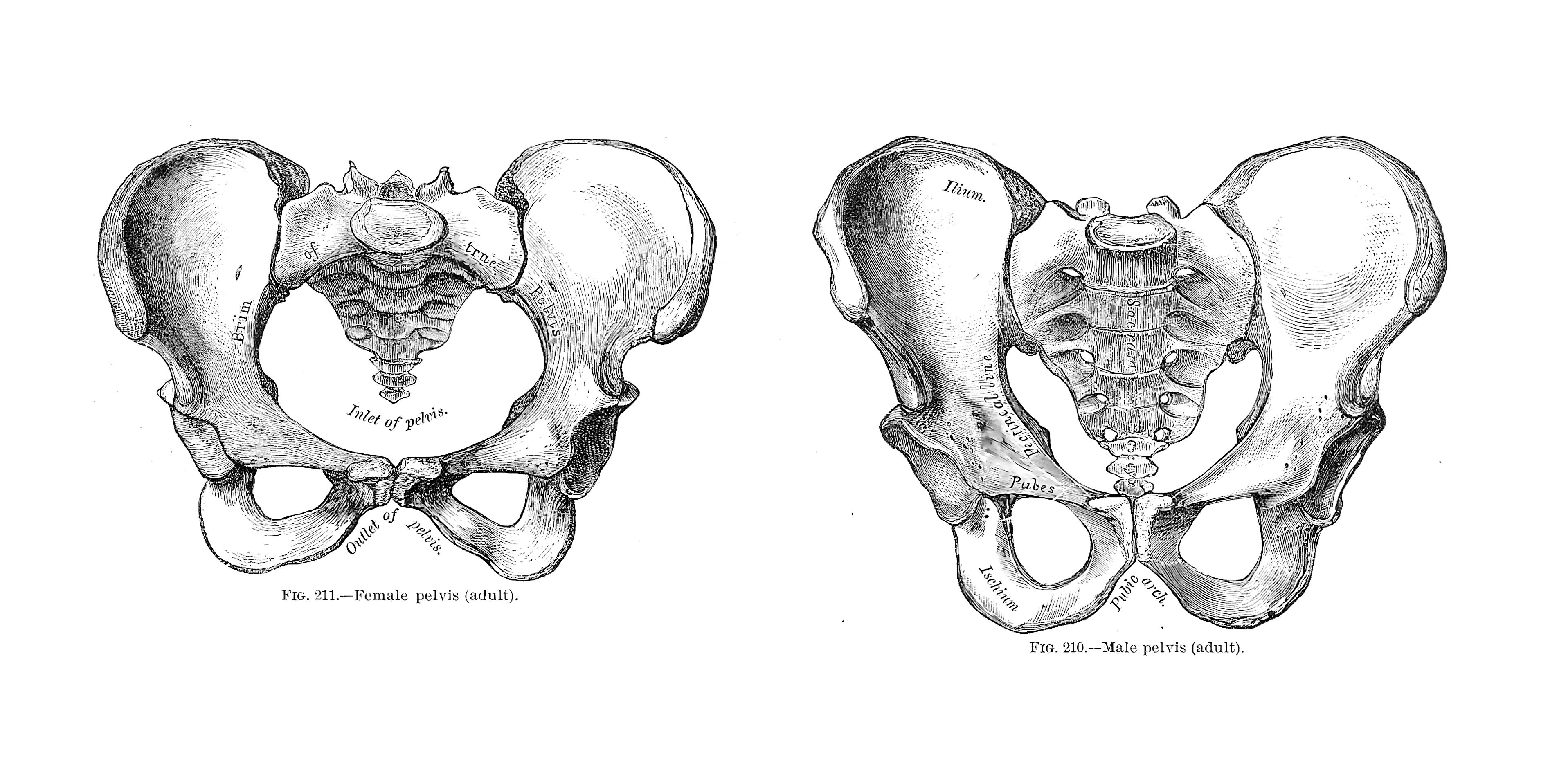
This particular skeleton had the narrower pelvis of a male. The skull likewise bore masculine features: a prominent brow ridge, a more pronounced external occipital protuberance at the back of the head, and heavier bone overall.
To determine age, anthropologists look at growth plates. In younger individuals, bones are still fusing together. The clavicle, for instance, doesn’t fully fuse to its growth plate until a person’s mid-to-late twenties. The pubic symphysis, the area where the two halves of the pelvis meet at the front, changes texture throughout adulthood, becoming rougher and more porous over time. The cranial sutures, those zigzagging seams where the plates of the skull join together, gradually close with age.
The skeleton showed partially fused growth plates, relatively smooth pubic surfaces, and open cranial sutures, all consistent with a young adult male. But the team was more precise than that, noting that the head of the femur and the medial end of the clavicle, areas that finish fusing in the early-to-mid twenties, showed growth had only recently stopped.
Based on the sternal ends of the ribs and the pubic symphysis, they estimated the man’s age at death as twenty-three, give or take a year. If Duke Béla was murdered in November 1272, that would place his birth around 1249 or 1250 — consistent with extant historical records, which note only that he was born sometime between 1243 and 1252.
There were also things the skeleton didn’t show, the absence of which helped identify its possessor’s place on the social hierarchy. For example, the spines of agricultural workers develop degenerative changes from decades of bending and lifting. Soldiers and manual laborers build up extra bone at the attachment sites of heavily used muscles, showing what are called “entheseal” changes, where repetitive stress creates tiny ruptures that heal and accumulate over time.
But this skeleton showed no such markers, its vertebrae lacking the osteophytes (bony projections) that would have appeared as a result of chronic spinal stress. The muscle attachment sites looked normal, without “facet hypertrophy” (enlarged bony growths on the facets, the small joints connecting the vertebrae). These develop in someone who has spent their life hauling goods or wielding weapons. Whoever this young man had been, he hadn’t worked like a medieval peasant, a common soldier, or a person of the lower classes.
To round out the profile, they had to estimate the skeleton’s height. The long bones, including the femur, tibia, and humerus, were measured and plugged into population-specific regression formulas to build a picture of the whole body. Because body shapes vary around the world, scientists use a formula derived specifically from that individual’s ancestral group, which accounts for differences in build and bone density.
The team calculated that this individual stood roughly 178 centimeters tall, or about five feet ten inches. For 13th-century Hungary, this was above average, consistent with the better nutrition that noble families enjoyed: consistent with an individual like Béla.
The teeth provided the final morphological clue.
“People in medieval times didn’t really care about [dental health],” says Anna Szécsényi-Nagy, PhD, an archeogeneticist at the Institute of Archaeogenomics in Budapest and co-author of the study. “There were big chunks of plaque that we could analyze.”
Microscopic analysis of plaque deposits in the skull’s remaining teeth revealed starch granules from cereals — wheat, barley, and the bread that formed the basis of medieval European diets.3 The samples also showed traces of cooked foods, plant material that had been processed and prepared rather than eaten raw. Peasants wouldn’t have eaten this lavishly.
So far, everything fit Béla’s profile. The skeleton belonged to a young male who had grown up in the right region and hadn’t experienced the physical stresses of the peasantry. But consistency is not proof. Many young aristocrats lived in 13th-century Hungary, and any of them might match this profile. To narrow the identification further, the team needed to establish when this person died and what this person ate (with even further specificity), which can be done through radiocarbon dating.
Radiocarbon Dating
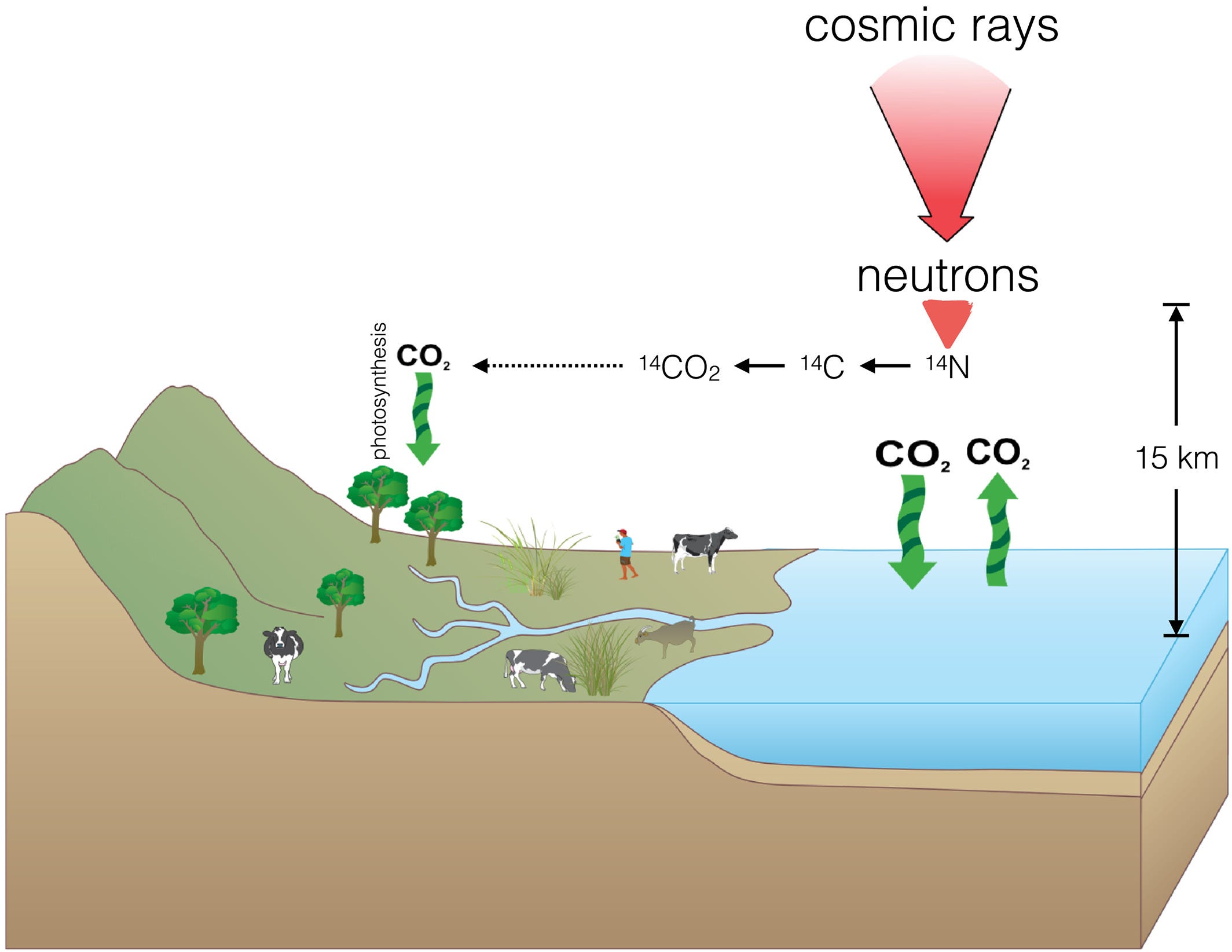
Carbon exists in several forms. Most is carbon-12, which is stable. But a tiny fraction, about one atom in a trillion, is carbon-14, which is radioactive. It’s constantly created in the upper atmosphere when cosmic rays strike nitrogen atoms, and it filters down into all living things on our planet. Plants absorb it during photosynthesis, and when animals eat these plants, carbon is taken up by their tissues.
When something dies, it stops absorbing new carbon. And because carbon-14 is unstable, it slowly decays into nitrogen-14, with half of it disappearing every 5,730 years. It is this principle that underlies radiocarbon dating; when an organism dies, its carbon-14 decays and is not replaced. Less carbon-14 means more time has passed.
This technique emerged from nuclear physics research. Carbon-14 was discovered in 1940, by researchers at the University of California Radiation Laboratory in Berkeley, California. The isotope was first a simple curiosity, but Willard Libby, working at the University of Chicago’s Institute for Nuclear Studies (founded to retain Manhattan Project scientists), recognized how it could be used to date samples.
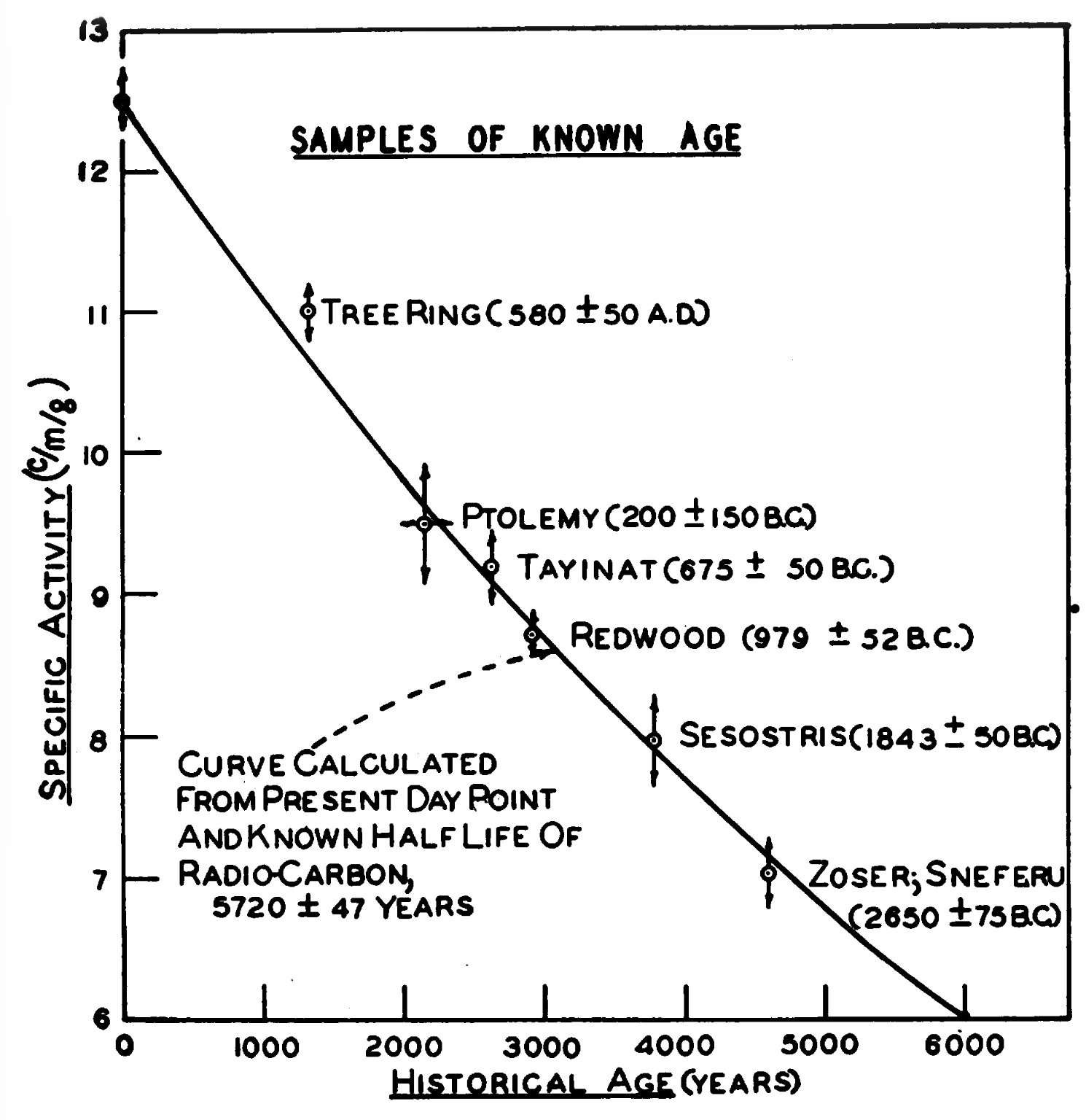
Libby published his first radiocarbon dates in 1949, including the famous “curve of knowns” — a validation plot showing that the method accurately dated Egyptian artifacts, sequoia tree rings, and other samples of known age. The impact was immediate. By 1960, when Libby won the Nobel Prize in Chemistry, more than 20 radiocarbon dating laboratories had been established worldwide.4
For the first time, researchers could date ancient remains without relying on written records. Yet despite giving archaeologists a universal clock that could place sites on different continents on a common timeline, radiocarbon dating is not perfect. It assumes atmospheric carbon-14 levels remain stable across millennia, which hasn’t always been the case.
An example of such a fluctuation can be found in a study conducted by the Groningen radiocarbon laboratory in the Netherlands, in which tomatoes bought fresh from the market at the time of the study appeared to be 1,300 years old.
So what happened? These tomatoes had been grown in greenhouses where the air was enriched with carbon dioxide (CO₂) to boost plant growth. The CO₂ came from burning fossil fuels like coal, oil, and natural gas, all of which are millions of years old and had started decaying long ago. The tomatoes absorbed this “dead” carbon instead of normal atmospheric carbon, making them appear far older than they actually were.
Something similar happened when researchers tried to date Duke Béla’s skeleton. The team turned to István Major, a radiocarbon specialist at Hungary’s Institute for Nuclear Research in Debrecen, which houses one of Central Europe’s leading accelerator mass spectrometry facilities. His laboratory has spent decades refining techniques for dating difficult samples such as cremated bones, contaminated materials, specimens that confound standard methods.
Béla’s skeleton brought back dates too early, clustering around 1030-1230 AD. At that time, “the nunnery couldn’t have even been established and built,” says Szécsényi-Nagy. “It was totally impossible.” (Indeed, the monastery hadn’t been founded until 1259).
At first, contamination was suspected. The skull had been treated with glue, paper, and plaster during earlier conservation efforts, and these materials might have introduced foreign carbon. The team tried multiple approaches: sampling different bones, separating inner and outer layers of bone, and using aggressive chemicals to thoroughly clean out contaminants. Despite all this, the results kept showing the burial took place long before Béla’s time.
A resolution finally came from a different type of analysis. In addition to carbon-14, bones contain other forms of carbon and nitrogen that don’t decay. The ratios of these stable isotopes can reveal information about diet. A high ratio of nitrogen-15 to nitrogen-14, for instance, indicates a diet rich in animal protein, like meat, dairy, or fish.
Upon checking Béla’s stable isotopes, “We figured out that he had a high-protein diet, so he ate a lot of meat,” says Szécsényi-Nagy. “And it is very probable, living or spending most of his time close to the Danube [river], that he ate lots of fish.” Béla’s nitrogen values were elevated well above the range typical for people eating mostly plants and land animals.
As it would turn out, freshwater fish pose the same problem as greenhouse tomatoes (only for a slightly different reason). Rivers like the Danube flow over ancient limestone bedrock, dissolving carbon that’s been locked in the rock for millions of years. Fish absorb this old carbon as they feed, and it accumulates in their bodies. When a person eats those fish, the old carbon gets incorporated into their bones. This is called the “freshwater reservoir effect,” and it was readily apparent in Béla’s bones: they contained less carbon-14 than they should have because he’d been eating carbon that was already “ancient” when he consumed it, thus distorting the dating results.5
Once Major’s team understood the confounder, they could model what the dates would look like if they corrected for it — testing shifts of 50 to 200 years to account for old carbon in Danube fish. The corrected dates aligned with the late 13th century.6
Additionally, they analyzed the mineral fraction of the bone rather than the collagen, the latter of which would lock in the older carbon. Bone mineral incorporates carbon not just from food but also from inhaled carbon dioxide and blood bicarbonate — sources that aren’t affected by the freshwater reservoir effect. The mineral carbonate dates clustered around 1170-1260 AD, consistent with a death in the late 13th century (and with historical chronicles that place Béla’s murder specifically in November 1272).
By this point, the investigation had answered some fundamental questions. Strontium isotopes placed the remains of this person’s childhood in the Hungarian basin, and radiocarbon dating put their death in the late 13th century. Each line of evidence had narrowed the possibilities, but further identification required ancient DNA analysis.
Ancient DNA
For most of history, forensic anthropology was a descriptive science. Researchers could establish a biological profile — sex, age, stature, ancestry, evidence of trauma — to narrow the pool of possible identities, excluding candidates who didn’t match. But positive identification required comparing remains against records created during the person’s lifetime: dental charts, medical X-rays, documented injuries. Without such records, identifying a dead person was infeasible.
The first major breakthrough came in 1984, when British geneticist Alec Jeffreys developed DNA fingerprinting at the University of Leicester. By exploiting regions of the genome that vary dramatically between individuals, he could produce a banding pattern unique to each person. The technique revolutionized criminal forensics and paternity testing, but it required relatively intact genetic material.
That posed a problem for ancient remains. DNA survives in bone far longer than in soft tissue because it becomes entombed within hydroxyapatite, the dense crystalline mineral that gives bone its rigidity. But it still degrades through purely chemical processes, shattering into fragments too short for traditional fingerprinting to read.
A way past this bottleneck came in 2005, when 454 Life Sciences released the first commercial next-generation sequencer. Well-suited to ancient DNA analysis, next-generation sequencing (NGS) permits the reading of millions of DNA fragments simultaneously rather than one at a time, using software to align the overlapping pieces against a reference genome.
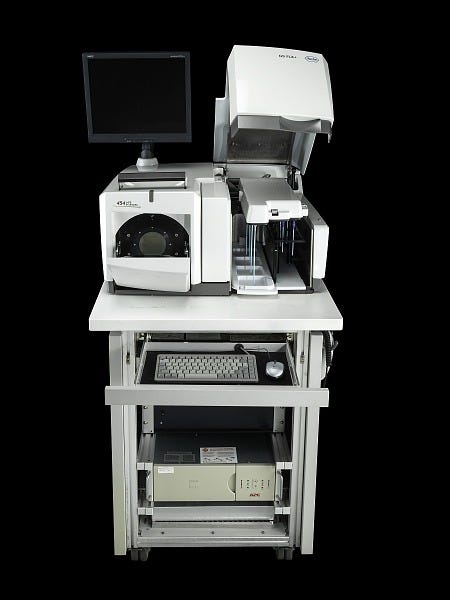
NGS was vital in cracking open Béla’s identity. But before they could sequence his genome, they had to extract the degraded fragments and build sequencing libraries from molecules that had been disintegrating since the 13th century.
At the Institute of Archaeogenomics in Budapest, Szécsényi-Nagy and Noémi Borbély began their ancient DNA analysis by drilling into the petrous bone on the skull. The petrous bone ossifies early in fetal development and undergoes almost no remodeling throughout life, creating a stable mineral matrix where DNA remains entombed.
They then followed the Dabney protocol, a standard method for ancient DNA extraction developed in 2013. The protocol calls for dissolving 50 milligrams of bone powder in a chemical solution overnight so the calcium phosphate matrix is broken down, releasing the DNA. Meanwhile, enzymes in the solution digest proteins and other contaminants. By morning, the powder becomes a murky liquid containing ancient DNA mixed with bacterial and fungal sequences.
Extraction takes two days: the first to dissolve the bone and release its DNA, and the second to purify it, followed by an additional two of “library preparation,” which involves attaching molecular tags so the sequencing machine can read each fragment and trace it back to its source.
The sequencing took three to four weeks, focusing on two critical regions: mitochondrial DNA and Y-chromosome markers. Mitochondrial DNA traces maternal descent. Every human cell contains hundreds of mitochondria, tiny structures that generate cellular energy, each carrying its own small genome. We inherit our mitochondria exclusively from our mother, who inherited hers from her mother, and so on — an unbroken chain of maternal inheritance.
Béla carried haplogroup U3b3 in his mitochondrial DNA, a lineage rooted in the Near East and southeastern Europe. This pointed toward Byzantine ancestry, consistent with the historical record: his maternal grandmother was Maria Laskarina, daughter of a Byzantine emperor.
Y-chromosome DNA traces paternal descent. Unlike other chromosomes, which shuffle their genetic material each generation, the Y chromosome passes from father to son essentially unchanged. Mutations accumulate one at a time, creating a linear record.
Béla belonged to a Y-chromosome lineage shared by the Rurikid dynasty — descendants of Rurik, a ninth-century Varangian prince who established the ruling house of Kievan Rus’. His Y-STR profile matched 24 tested descendants of the Rurikids in modern genealogical databases, and aligned perfectly with the anticipated profile of Rurik himself.
The Y-chromosome analysis was particularly delicate, as any contamination from modern DNA would invalidate the results, so the team ran every step at least twice to confirm authenticity. They also ran the sequencing experiments in both Budapest and at Harvard University.
Harvard’s ancient DNA laboratory had isolated the cochlea itself (the coiled structure of the inner ear), which yields up to 65-fold more endogenous DNA than other skeletal tissue. Whereas the Budapest team focused on mitochondrial DNA and the Y chromosome, the Harvard scientists generated genome-wide data, sequencing across all twenty-two autosomal chromosomes because their aim was population history, not individual identification. But this data sat unused.
Szécsényi-Nagy’s team requested the raw sequencing files from Harvard and, with both datasets in hand, could finally check Y-chromosome markers against the whole-genome data. Crucially, they could also run identity-by-descent analysis to measure Béla’s genetic relatedness to other sequenced medieval royals.
Any two people with a common ancestor inherit stretches of identical DNA from that ancestor. But with each generation, chromosomes reshuffle, breaking those shared stretches into smaller pieces. Siblings share long, continuous blocks of matching sequence. Fourth cousins share only scattered fragments. The math is predictable enough to work backward: measure the total length of identical segments between two individuals, and you can estimate how many generations separate them from their common ancestor.
When the team compared Béla’s genome against previously sequenced medieval royals, the genetic relationships matched the family trees with high precision. Béla of Macsó was indeed a descendant of Béla III, the twelfth-century Hungarian king, separated by exactly the four generations the genealogical records predicted. And in 2023, the final piece fell into place: Dmitry Alexandrovich, a 13th-century Rus’ prince whose genome had been published in a separate study, emerged as a distant relative — confirming the connection to the Rurikid dynasty that Y-chromosome analysis had first suggested three years earlier.
“This whole network of relatedness fitted so nicely together,” Szécsényi-Nagy says. “The genetic evidence didn’t just support the historical record; it was locked into place like pieces of a puzzle.”
Forensic Trauma Analysis
The final unanswered question was the manner of Béla’s death. The chronicles claimed he was murdered. The bones could test that claim, but determining specific types of violence on his skeleton required distinguishing whether its wounds had been inflicted during his lifetime (including what might have been his death wounds) or from the damage accumulated over the seven centuries Béla’s skeleton had spent underground.
Every excavated skeleton shows wear: fractures from soil pressure, breaks from careless excavation, and erosion from groundwater. Bones absorb minerals from surrounding earth, staining brown or yellow depending on soil chemistry. This discoloration helps identify when damage occurred. Ancient healed injuries show bone remodeling around the wound. Fresh breaks from modern handling expose pale, unstained bone. The harder question is whether an unhealed, stained wound represents a killing blow or damage inflicted during burial centuries ago.
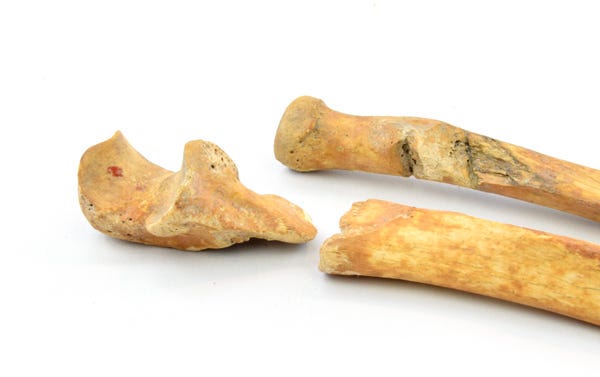
The answer lies in collagen. In living bones, this protein provides flexibility. A hard blow breaks the bone cleanly, with smooth fracture lines following the natural grain. Centuries after death, once its collagen has degraded, bone becomes brittle and shatters like dry wood, leaving jagged edges that crumble rather than split. But for roughly a decade after death — the “perimortem period”— bone retains enough collagen to fracture like living tissue. Wounds from this window of time leave distinctive signatures like smooth-edged cuts, clean fractures, and breaks that follow the grain. Wounds inflicted at or near the moment of death show no signs of healing.
Béla’s skeleton displayed twenty-six perimortem injuries with no new bone growth around the wound edges: nine to the skull, seventeen to the body. He died from these wounds, or moments after receiving them.
The shape of each wound also provides clues as to what made it. “Imagine you have a block of soap,” explains Martin Trautmann, a forensic anthropologist who collaborated on the research while at the University of Helsinki, “and you use an ax with quite a thick blade. When this penetrates the block, it will push a lot of material to the sides, just because it’s so broad.” A thick blade crushing into bone leaves small parallel lines along the cut where the outer layer was pushed aside. Forensic scientists call this “feathering.” A thinner blade makes a cleaner cut with minimal disruption to the surrounding surface.
In the 13th-century, Hungary had two distinct blade traditions. Western European longswords, designed for thrusting as well as chopping, were symmetric and double-edged, with a gently curved cross-section. Sabers, which had entered Central Europe with equestrian peoples of the Eurasian steppe, were single-edged and curved, with a thin, wedged-shaped cross-section.
Both weapons left their marks on Béla. The wounds to his head and upper body showed the signatures of a lighter, sharper blade wielded in sweeping arcs, consistent with a saber. The wounds to his legs were heavier, with slight crushing of the bone surface, consistent with a longsword’s chopping stroke.
Two weapons meant at least two attackers. But had there been more?
To find out, Trautmann worked with an articulated laboratory skeleton, the kind used in anatomy classes. He marked each of Béla’s twenty-six wounds in their exact positions on the articulated skeleton, matching their length, angle, and orientation.
Each lesion was analyzed for forensic information through both direct visual inspection and radiologic imaging. Diagnostic marks on the damaged surfaces revealed not just where blows landed, but their direction of origin, the angles of impact, and the probable movements of the weapons and attackers. Trautmann also took similar weapons to the medieval saber and sword profiles used by the attackers and fitted them directly into the bone lesions to find out which type of weapon inflicted each.
By combining all this data about wound location, weapon type, strike direction, and sequence, Trautmann could test scenarios against the physical evidence. In his reconstructive analysis, he put one attacker facing the laboratory skeleton’s front, and two facing from the sides, envisioning different sequences of blows and the defensive postures the living Béla would have adopted.
The pattern that emerged was unambiguous, according to Trautmann. “Béla was confronting a person. This person drew his saber, hit him two to three times on the head and upper body. And then the other two people, probably allies of the saber-wielding attacker, flanked the victim from the left and the right — they kind of cut off his retreat … and then they finished him.”
Historical accounts had offered two versions of Béla’s death: an ambush from behind or a dispute that escalated into violence. Cuts to both forearms showed Béla had raised his arms to protect his head in a defensive reflex, which also meant he hadn’t carried a weapon or shield. The wounds were inflicted mostly on the front of his body, so he faced his killers.
Béla’s wounds are consistent with records that suggest that the motive was a heated dispute with Henrik Kőszegi, still angry by Béla’s betrayal during the Battle of Isaszeg, where Béla fled from the battle while Henrik was captured.
That Henrik had not forgiven this is evidenced by Béla’s facial injuries. “[It] looks like the eyes were gouged out and the nose was cut off,” Trautmann explains. “This kind of facial injury is mentioned in written sources as a punitive act for treason and disloyalty” in medieval Central Europe.
Because the assault continued even after Béla had most likely received a mortal wound, it must have been “a strange mixture of cold and hot blood,” Trautmann concludes. “They were prepared to attack, but when they did, they got carried away.”
What the Dead Reveal
Béla’s case offered a rare combination for bioarchaeologists: a nobleman whose death was chronicled by scribes and whose body was preserved. But complex bioarchaeology is revealing patterns with more complicated remains, even those of mass fatalities.
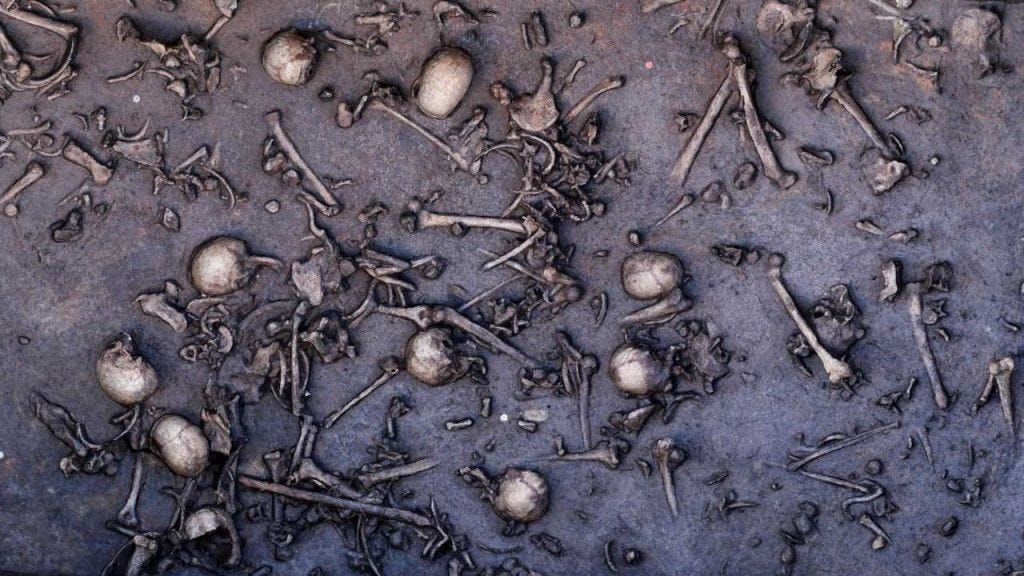
Consider the Bronze Age battle that ravaged the Tollense Valley over 3,000 years ago, when thousands of warriors clashed at a strategic river crossing in what is now northeastern Germany. Before bioarchaeological analysis of the site, many archaeologists doubted that large-scale organized combat existed in prehistoric Europe — weapons in graves were seen as status symbols, and any violence was assumed to be small-scale raiding between local clans.
However, large-scale excavations of the site demolished this assumption. Excavators recovered over 10,000 bones representing at least 150 individuals, almost all young men killed around 1250 BCE. Isotope and DNA analysis revealed the warriors came from across the continent — southern Europe, Scandinavia, Poland — while a 2024 arrowhead study found weapons characteristic of southern Germany and Moravia. The emerging picture is of coordinated, long-distance military mobilization in a region that would remain illiterate for centuries, leaving no written record of what may have been a common practice.
Complex bioarchaeology can also remedy incomplete or inaccurate records. Greek historians celebrated the Battle of Himera in 480 BCE as a triumph of Hellenic unity against Carthage, mentioning reinforcements from Syracuse and Agrigento but no foreigners. Yet isotope analysis of soldiers buried in mass graves revealed approximately two-thirds grew up outside Sicily, while DNA analysis showed nine warriors had genetic affinities with central Europe, northeastern Europe, the Eurasian steppe, and Armenia. They were possibly mercenaries from as far as the Baltic whose contribution was never recorded by ancient chroniclers.
Criminologists use the term “dark figure” to describe the gap between actual crime and what gets reported. Ancient violence has an enormous dark figure, which even complex bioarchaeology struggles to reconcile. Death tolls require institutional memory that ancient societies rarely built. While ancient states kept records, they tended to count the living, not the dead, capturing snapshots of who existed and what they owned, not who had died.7 While ancient states maintained censuses of the living for taxation and labor, systematic registration of deaths emerged primarily in 19th-century Europe and North America.
Complex bioarchaeology cannot resurrect demographic data that was never collected. It can’t tell us how many people died at Tollense Valley; only that the minimum was 150 (based on recovered bones), with the true figure almost certainly far higher. But it can help fill important gaps, offering confirmatory data for ancient mysteries such as Béla. It could also aid in investigating the far more numerous ordinary deaths that historians have failed to notice.
Each excavation and analysis, then, contributes to a growing body of knowledge about how people lived and died. With every skeleton identified and every wound pattern reconstructed, the dark figure shrinks. And while we may never resolve the enduring questions regarding violence and human nature, at least we can now tackle these questions in an evidence-based way. Written history is a starting point, but records kept in calcium, carbon, collagen, and DNA move us further along.
David Brzostowicki is a journalist whose writing covers emerging research in biomedical sciences, biotechnology, and healthcare. He is currently a graduate student at Florida Atlantic University’s College of Medicine in Boca Raton, FL, where he studies the molecular mechanisms linking vascular health to metabolic protection, with a focus on circadian pathways and endothelial-to-muscle signaling.
Thanks to Anna Szécsényi-Nagy for her generous interviews and explanations on ancient DNA analysis and the study’s background, and to Martin Trautmann for his expertise in forensic trauma analysis. Header image by Ella Watkins-Dulaney.
Cite: Brzostowicki D. “Dead Reckoning.” Asimov Press (2026). DOI: 10.62211/84jy-26we
The Aurél Török Collection is named after Aurél Török (1842–1912), who founded Hungary’s Department of Anthropology at the University of Budapest in 1881, the fourth such university institute in Europe. Török was a pioneering figure in physical anthropology and became known as the “reformer of craniology at Pest.”
The saga does not end here: In April 2024, Russian state media declared that “declassified archival documents” now refute Soviet guilt, reverting to the original Stalinist version.
This work was done in collaboration with the Faculty of Dentistry at the University of Debrecen, Hungary.
Historians of archaeology call this the “radiocarbon revolution.”
The freshwater reservoir effect doesn’t just affect bones. When fish or other aquatic organisms are cooked in pottery, their ancient carbon contaminates the food residues that archaeologists often use for radiocarbon dating. A pot used to cook Danube fish could appear centuries older than it actually is.
Despite being recognized for over 60 years, the freshwater reservoir effect remains less familiar to archaeologists than its marine equivalent — yet it can be just as severe, and far more unpredictable. Marine reservoir ages are relatively stable, typically around 400 years globally.
Babylonian censuses dating to 4000 BC tracked the population for food distribution. Egyptian censuses from 2500 BC estimated labor forces for pyramid construction. And Roman censuses, conducted every five years, registered citizens and their property for taxation and military conscription.